

How To Do Robotic Affirmations: A Simple Guide With 50 Examples

Robotic affirmations mean repeating a short statement in an ordinary, neutral way without trying to produce a particular feeling. To try them, choose one helpful sentence, repeat it for a brief period, then take a small action that supports its message. No special voice, equipment or perfect belief is required.
Perhaps enthusiastic affirmations have never felt comfortable. Saying that everything is wonderful when the day has been difficult can feel like arguing with yourself. A simpler sentence, spoken without a performance, may feel more manageable. Robotic affirming is one way to experiment with that. Think of it as a personal self-talk practice, not a proven shortcut to money, love or a different life.
In this blog post, we explore how to do robotic affirmations, what robotic affirmations are, how many to practise, their effectiveness, and how they affect your mindset. We also provide you with a list of 50 affirmations that span various aspects of your life for manifestation. You can also visualise while performing robotic affirmation.
Table of Contents
What Are Robotic Affirmations?
Robotic affirmations are positive or supportive statements repeated with little emphasis on emotion. The word “robotic” describes the repetitive delivery, not a need for artificial intelligence or a machine. For example, before a difficult conversation, someone might repeat:
“I can explain what I need, one sentence at a time.”
They could say it aloud or repeat it silently. Rather than trying to feel fearless, they use the sentence as a reminder of how they want to respond.
Some manifestation communities describe repetition as a way to make a desired outcome happen. That is a belief about manifestation, not an established scientific result. A statement can be meaningful without being a guarantee about events or another person’s choices.
For the wider picture, explore the guide to positive affirmations.
How To Do Robotic Affirmations Step By Step
1. Choose one situation
Start with something specific, such as speaking in a meeting, beginning a task or making time for rest. Trying to address every part of your life at once can make the exercise unnecessarily complicated.
Ask yourself: “What would be useful to remember in this situation?”
Before a meeting, that might be permission to contribute without having every answer. Before a task, it might be permission to begin with an imperfect first attempt.
2. Write a short, supportive statement
Choose words that point towards a response within your control.
“Everyone will admire me” depends on other people. “I can make my point clearly” gives you something to practise.
If a sentence feels completely untrue, make it less absolute. Instead of “I am always confident,” try “I can take one step while I feel unsure.” There is no need to force yourself into words that make you feel worse.
3. Repeat it in your normal voice
Say the sentence at an easy pace, or repeat it silently. A flat, mechanical voice is optional. Neither excitement nor a blank mind is a requirement for trying the exercise.
When another thought appears, let it be there and return to the sentence if you wish. Having doubts does not mean you have failed.
4. Keep the first session brief
Try one or two minutes as a convenient starting point. This is a practical suggestion, not a scientifically established dose. There is no need to count hundreds of repetitions or fill every spare moment with affirmations.
Practise somewhere that does not require your full attention for safety. Avoid using the exercise in a way that distracts from driving or other demanding activities.
5. Follow the words with one action
Give the sentence a practical purpose.
After repeating “I can begin before I feel ready,” open the document and write its first sentence. After “My needs deserve consideration,” draft a clear request.
The action matters because it addresses the situation itself. Repetition does not complete the task or make the conversation happen for you.
6. Notice whether it helps
Afterwards, ask: “Did this help me respond more usefully, or did it leave me feeling pressured?”
Continue only if the practice serves you. Change the wording, shorten the session or stop if it becomes frustrating. Missing a day does not erase anything, and there is no penalty for deciding that another tool suits you better.
A Worked Example Before A Meeting
Imagine that you have an idea to share but keep thinking, “Someone will ask a question I cannot answer.”
Choose this affirmation: “I can contribute without knowing everything.”
Repeat it for a minute. Then write down your main point and one example that explains it. Prepare a response for a question you cannot answer: “I would like to check that before giving you an answer.”
The aim is not to control everyone’s opinion. The sentence reminds you that preparation and honesty can coexist with uncertainty.
For more on taking useful steps without pretending to feel fearless, read how to build authentic confidence.
Do Robotic Affirmations Work?
While scientific research specifically on robotic affirmations may be limited, the underlying principles of affirmations are well supported. Studies and success stories have shown that positive affirmations can enhance self-esteem, reduce stress, and promote a healthier mindset. The robotic delivery method may further eliminate emotional resistance, allowing for a more straightforward acceptance of the affirmations.
However, the effectiveness of robotic affirmations depends and varies from person to person. Some people may find the technique liberating and empowering, while others may prefer a more traditional approach. Experimentation is key; try robotic affirmations and see how they resonate with you. Regular practice is key.
How Robotic Affirmations Can Change Your Mindset
Robotic affirmations offer a unique approach to the traditional practice of affirmations by using a detached, monotone delivery that can significantly influence your mindset. Here are several ways that robotic affirmations can help shift your thinking and help with personal growth:
Bypass Emotional Resistance
One of the primary benefits of robotic affirmations is that they can bypass emotional resistance. Traditional affirmations, when delivered with emotion, can sometimes trigger scepticism or doubt, especially if you struggle to believe the statements being made. The robotic delivery removes the emotional weight, allowing you to absorb the affirmations more freely. This can help you internalise the messages without the usual mental barriers.
Consistency and Routine
Robotic affirmations encourage consistency, which is crucial to changing your mindset. When affirmations are repeated in a monotone manner, they become a rhythmic and habitual practice. This regular repetition reinforces the messages and helps embed them in your subconscious mind. Over time, these affirmations can transform negative thought patterns into positive beliefs through sheer frequency and familiarity.
Focus on Content Over Delivery
When affirmations are delivered robotically, the focus shifts from the emotional tone to the content of the affirmations themselves. This enables you to focus exclusively on the content of the message, rather than its delivery method. As a result, the affirmations may resonate more profoundly, encouraging a deeper understanding and acceptance of the statements.
Encouraging a Neutral Perspective
The robotic delivery encourages a neutral perspective, helping you to view your affirmations objectively. This detachment can reduce attachment to outcomes and expectations so that you can approach your goals with a more open mindset. This can lead to less pressure and anxiety around achievement, promoting a healthier attitude towards personal growth.
Reprogramming Negative Thoughts
Robotic affirmations can be particularly effective in reprogramming negative beliefs. By consistently exposing yourself to positive affirmations in a neutral tone, you can gradually overwrite negative self-talk and self-doubt. This process of reprogramming can lead to an overall improvement in self-esteem and confidence, creating a more positive self-image.
Creating a Safe Space for Exploration
The unemotional nature of robotic affirmations can create a safe space if you want to explore your aspirations without fear of judgement or vulnerability. This can encourage you to confront your limiting beliefs and consider possibilities you might otherwise avoid. By normalising the practice of affirming your worth and potential, you may feel empowered to pursue your goals more assertively.
Enhanced Mindfulness
Practicing robotic affirmations can promote mindfulness by encouraging you to be present during the affirmation process. The repetition and focus required can help clear your mind of distractions, adopting a meditative state. This mindfulness can enhance overall mental clarity, allowing you to engage with your thoughts and feelings more effectively.
Facilitating a Growth Mindset
By reinforcing the belief that abilities and intelligence can develop through dedication and hard work, robotic affirmations can foster a growth mindset. By regularly affirming positive statements related to growth, learning, and resilience, you develop a mindset that supports challenges and sees failures as opportunities for learning.
How Many Affirmations Should You Repeat?
One is enough to start. Two or three may be useful if they relate to the same situation, but there is no established ideal number.
The list below gives you options rather than a daily assignment. Choose a statement that fits your circumstances and adapt its wording. Repeat the same one while it remains relevant; change it when your needs change.
50 Robotic Affirmation Examples
Keep in mind that our examples focus on supportive attitudes and choices rather than promises. Health statements are not medical treatments, money statements do not create income by themselves, and relationship statements cannot determine someone else’s feelings.
Health and everyday care
1. I can make time to care for my body.
2. Rest belongs in my day.
3. I can ask for help with my health.
4. Small acts of care are worthwhile.
5. My body deserves kindness today.
Money
6. I can look at my finances one step at a time.
7. Learning about money is worth my time.
8. I can pause before making a purchase.
9. My worth is not my bank balance.
10. I can investigate opportunities carefully.
Love
11. I deserve love that includes respect.
12. Being myself matters in a relationship.
13. I can express affection honestly.
14. Another person’s choice does not define my worth.
15. I can take time to know someone.
Relationships
16. My needs deserve consideration.
17. Listening is something I can practise.
18. I can say no without being unkind.
19. Respect belongs on both sides of a conversation.
20. I can appreciate the people who support me.
Career
21. I can prepare for the next opportunity.
22. Asking a question can help me learn.
23. My contribution does not need to be perfect.
24. I can explain what I know clearly.
25. Feedback can inform my next attempt.
Business
26. I can learn what my customers need.
27. Clear communication helps me explain my work.
28. I can test an idea before committing more resources.
29. A disappointing result gives me something to examine.
30. Useful work deserves a clear explanation.
Everyday confidence
31. I can take one step while feeling unsure.
32. My opinion deserves thoughtful consideration.
33. I can pause before answering.
34. One mistake is not my whole story.
35. I can contribute without knowing everything.
Personal growth
36. Starting small still counts as starting.
37. I can learn from this attempt.
38. Curiosity gives me room to try.
39. Progress does not require a perfect day.
40. I can change my mind when I learn something new.
Meaning and inner life
41. I can make choices that reflect my values.
42. There is room to reflect before I respond.
43. I do not need every answer today.
44. My life can include meaning in ordinary moments.
45. I can return to what matters to me.
Enjoyment and appreciation
46. I can notice something pleasant today.
47. Enjoyment does not need to be earned.
48. A difficult day can still contain a good moment.
49. I can make room for something I enjoy.
50. Appreciation does not require pretending everything is fine.
Prefer A Question To A Statement?
Sometimes a question gives you a more useful starting point. Instead of repeating “I am confident,” ask, “What could help me contribute today?” Then look for an answer you can act on. For related prompts, explore lofty questions for self-confidence and self-esteem. Treat the questions as invitations to reflect, not as instructions to deny your circumstances.
You can also create your own affirmations and customise them to suit your goals and aspirations. When you know how to do robotic affirmations, you have a unique and innovative approach to the practice of affirmations. It is a useful tool for personal growth and mindset transformation.
When you adopt this technique and focus daily on a manageable number of affirmations, these short positive statements can create meaningful change in your life. Whether you want improvement in health, finances, love, or career, robotic affirmations can be a valuable addition to your self-improvement toolkit.
So, why not give it a try and see how doing robotic affirmations can benefit you? Affirming works!
Common Questions About Robotic Affirming
Do you have to feel the affirmation?
No particular emotion is required to try the practice. Neutrality is part of its appeal, but do not force yourself to suppress sadness, frustration or doubt. Your actual feelings deserve attention too.
Can you repeat affirmations silently?
Yes. Silent repetition is an option when speaking aloud would be inconvenient. You do not need an audio recording, app or text-to-speech tool.
Can you visualise at the same time?
If you enjoy visualisation, you can imagine taking the action connected with your sentence, such as introducing yourself or opening your notes. Visualisation is optional, and combining the two is not a guarantee of better results.
How long do robotic affirmations take to work?
There is no established timeline. Avoid treating promises of results in a set number of hours or days as facts. A more useful question is whether the exercise helps you take a constructive step today.
What if an affirmation makes you feel worse?
Stop or choose a less absolute sentence. “I can practise speaking up” may be easier to work with than “I am completely confident.” Nothing requires you to persist with an exercise that leaves you more distressed. If distress continues or interferes with daily life, seek support from a qualified mental health professional.
Can robotic affirmations make someone love you?
They cannot guarantee another person’s feelings or choices. Use relationship affirmations to clarify your own needs, practise respectful communication and remember your worth, while respecting the other person’s freedom to choose.
Enhance Your Robotic Affirmations With Lofty Questions

This book is the perfect guide for anyone who is looking to make a positive change in their life and become a better version of themselves. It will help you reset your mindset and open up the possibilities of achieving your dreams, no matter who you are or where you are in life.
The book includes practical tips and a set of lofty questions to help you get into the right mindset for the day, reframe how you think about an issue, and make meaningful changes in various areas of your life. To get the most out of the book, you are given a 7-day challenge to improve your mindset about self-esteem, confidence, positivity, money, health, abundance, and gratitude.
Along with the book, you will also receive a bonus book to help you become a better version of yourself by guiding you to change your habits (download link in the book). So, take the leap and become a stronger person today with this book.

Your mind is powerful but your subconscious is what decides what stays, grows, and manifests.
This practical guide gives you the tools to reprogram limiting beliefs, release resistance and align your inner world with the success, confidence, and abundance you’re ready for.
Inside, you'll learn how to:
- Clear hidden mental blocks using Emotional Freedom Technique (EFT).
- Use scripting, journaling, and visualisation to send instructions to your subconscious mind.
- Tap into the power of sleep reprogramming and subliminal audio.
- Calm your nervous system through daily routines and mindfulness practices.
- Move through resistance and break the cycle of self-sabotage.
- Build a mindset that attracts new opportunities, without relying on willpower.
The book also includes a 21-day subconscious reprogramming challenge that provides daily practical steps to help you transition from being stuck to being aligned.
If you’re ready to stop forcing change and start allowing success, "Manifest with the Subconscious Mind" will show you how to work with the most powerful part of your mind to affect change in your life.
You don’t need to think harder but only need to rewire what's already in charge.
Start With Words You Can Use
A helpful affirmation does not need to sound impressive. Choose something that makes the next step feel possible, repeat it briefly, and see what you can do with it.
“I can begin with what I have” may be enough for today.
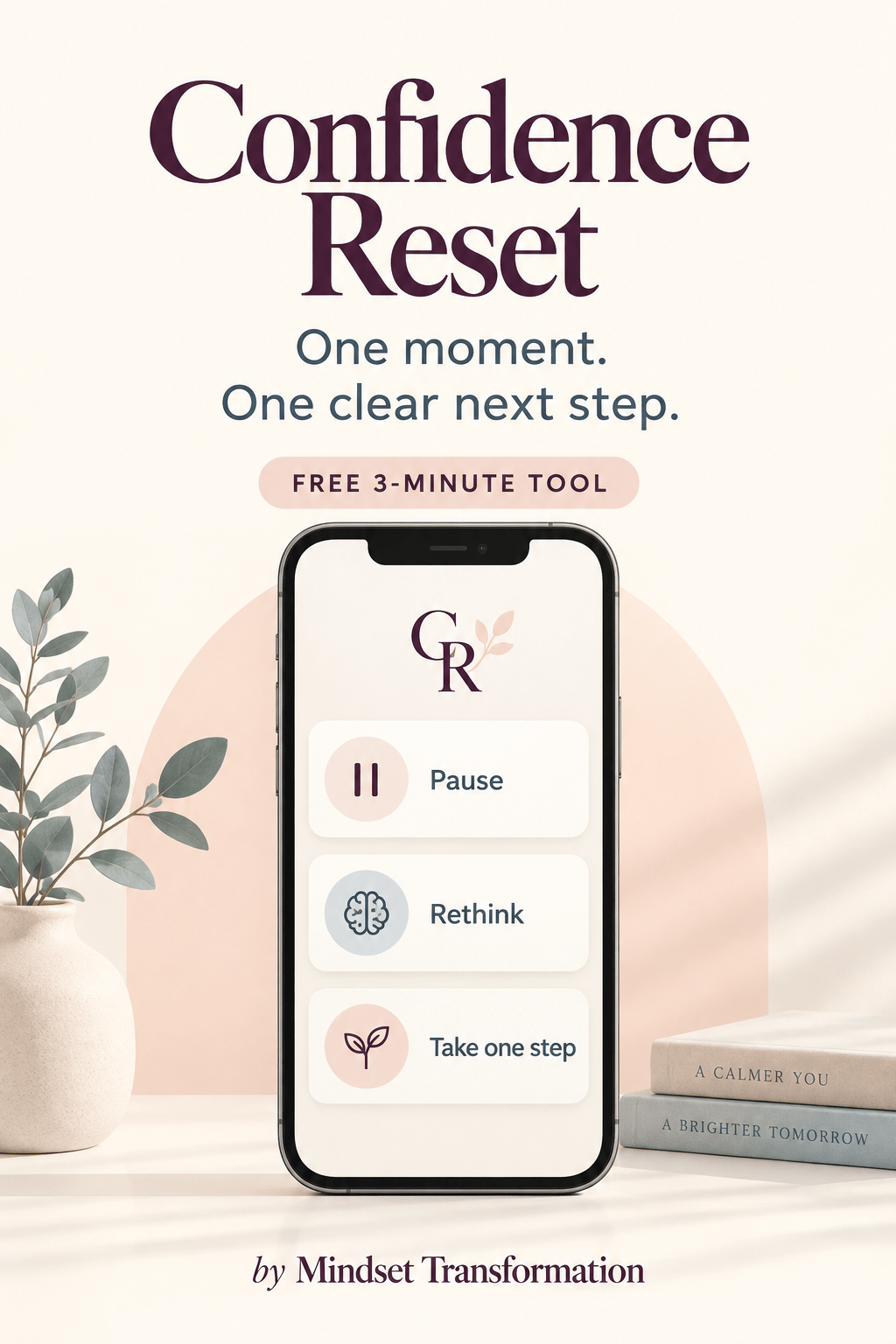
If you would like a guided way to work through doubt before an important moment, you can sign up for the free Confidence Reset app.
Continue Reading
- The Complete Guide to Productivity and Success: How to Achieve More Without Burning Out
- Money Mindset and Abundance: A Practical Guide to Changing Your Relationship With Money
- The Complete Guide to Healthy Relationships
- Your Ultimate Guide to Positive Affirmations That Actually Work
- Your Ultimate Guide to Lasting Self-Belief And Confidence








Leave a Comment